
JOIN THE REVIVAL
Date of Next Podcast:
Coming in 2026——>
Topic: Revival in the Last Days
Questions:
-What does the Bible say about America’s fate in the last days?
-Are Pastors seeing a Revival?
Published Podcasts
Chapter: The Three Bibles of Early America
Scripture and the Birth of a Nation

Founding Faith Blog:
The Three Bibles of Revolutionary America (1776)
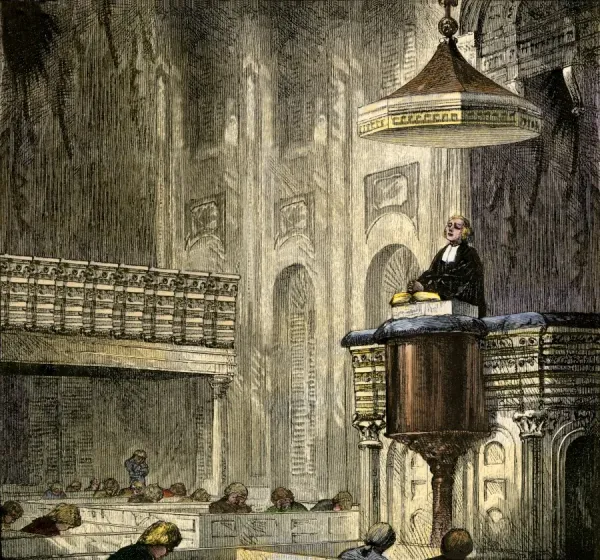
In the late eighteenth century, the Bible was the most widely read and influential book in the American colonies. Before the founding of the United States, colonial society revolved around scripture in ways that modern readers often find difficult to imagine. The Bible was not merely a religious text. It was a schoolbook, a moral authority, a legal reference, and a source of political language.
In homes scattered across farms and frontier settlements, families gathered in the evening by candlelight to read passages aloud. Ministers built sermons around its verses, magistrates swore oaths upon it, and political leaders quoted it in speeches about liberty and justice. During the turmoil of the American Revolutionary War, the Bible served as both a spiritual guide and a cultural anchor.
Yet the Bible that shaped early American life did not exist in only one form. By the time of independence in 1776, three major Bible traditions circulated throughout the colonies. These were the King James Bible, the Saur Bible, and later the Aitken Bible.
Each of these editions tells a different story about the people who read them. One came from England and shaped the language of American Protestantism. Another was printed for the German-speaking immigrants who had settled in Pennsylvania. The third emerged from the practical needs of a revolutionary nation cut off from British supply lines.
Together, these three Bibles illustrate the complex relationship between faith, language, and national identity during the founding of the United States.
The King James Bible: England’s Gift to the Colonies


Long before the American colonies declared independence, English settlers brought with them a Bible that would dominate Protestant life for centuries: the King James Bible.
This translation was commissioned in 1604 by King James I of England and first printed in 1611. Its creation arose from religious tensions within the Church of England. England had experienced decades of conflict between different Protestant groups, each using different Bible translations and theological interpretations.
The most popular translation among English Protestants was the Geneva Bible. Produced by reformers in Switzerland, it contained extensive marginal notes explaining scripture. These notes sometimes suggested that rulers who defied God could be resisted—a concept that made King James deeply uncomfortable.
Seeking to unify his kingdom under a single authorized translation, James approved a new project during the Hampton Court Conference in 1604.
The Scholars Behind the Translation
The translation effort involved approximately 47 scholars, divided into six committees working in three cities: Oxford, Cambridge, and Westminster. Each group translated specific portions of the Bible, consulting Hebrew, Greek, and earlier English translations.
Earlier works—especially the Tyndale Bible—served as important foundations. William Tyndale’s translation from the sixteenth century had introduced many phrases that still appear in modern English.
The translators aimed to produce a text that was both accurate and majestic in tone. Their work succeeded beyond expectation. The King James Bible became not only a religious text but also a masterpiece of English literature.
Phrases such as “the powers that be,” “the valley of the shadow of death,” and “a thorn in the flesh” entered everyday speech through its pages.
The King James Bible in Colonial Society
When English settlers arrived in North America during the seventeenth century, they carried copies of the King James Bible with them. By the 1700s it had become the standard Bible for English-speaking Protestants across the colonies.
Churches used it in public worship. Ministers quoted it extensively in sermons, and many colonial laws reflected its moral teachings.
In many households the Bible was the largest and most valuable book owned by the family. It often contained handwritten records of births, marriages, and deaths.
Yet almost all of these Bibles were printed in England. Colonial printers lacked the resources and political permission required to produce such a massive work. As a result, the American colonies depended heavily on imported Bibles.
This dependence would become a serious problem once the colonies entered open conflict with Britain.
The 80 Books of the Early King James Bible
One fact often surprises modern readers: the original King James Bible contained 80 books, not the 66 found in most modern Protestant editions.
The additional books appeared in a section called the Apocrypha, placed between the Old and New Testaments.
Old Testament (39 books)
These correspond to the books of the Hebrew Bible, including Genesis, Exodus, Isaiah, and others through Malachi.
Apocrypha (14 books)
The Apocrypha included writings such as:
- 1 Esdras
- 2 Esdras
- Tobit
- Judith
- Wisdom of Solomon
- Ecclesiasticus (Sirach)
- Baruch
- 1 Maccabees
- 2 Maccabees
Protestant reformers regarded these works as valuable historical writings but not fully inspired scripture.
New Testament (27 books)
Matthew through Revelation completed the biblical canon used by most Protestant churches.
Additional Apocrypha
Even in the seventeenth century, scholars knew of additional books.
Among these were the Book of Enoch, the Book of Jubilees, Gospel of Thomas, Gospel of Peter, Gospel According to the Hebrews, and the Shepherd of Hermas.
These writings were sometimes quoted by early Christian authors but were not widely accepted as canonical scripture. For this reason, they were not included in the King James Bible.
One notable exception exists in Ethiopia, where the Ethiopian Orthodox Church preserved the Book of Enoch within its biblical canon.
The Saur Bible: A Bible for German America


While English colonists relied on the King James Bible, another community in early America required scripture in a different language.
During the eighteenth century, Pennsylvania became home to thousands of German-speaking immigrants. These settlers came from regions of modern Germany and Switzerland seeking religious freedom and economic opportunity.
They established farming communities across Pennsylvania and formed churches representing a wide range of Protestant traditions. These included Mennonites, Amish, Lutherans, and Brethren congregations.
Because many of these immigrants spoke little English, they depended on German-language Bibles.
Christopher Saur and the First American Bible
The man who changed the situation was Christopher Saur, a German printer living in Germantown, Pennsylvania.
In 1743, Saur printed what became the first Bible produced in North America in a European language.
The project was extraordinarily difficult. Printing a Bible required thousands of pages of type, vast quantities of paper, and meticulous proofreading.
Saur financed the effort largely himself. When the book finally appeared, it represented a milestone in American printing history.
Features of the Saur Bible
The Saur Bible followed the German translation created by Martin Luther during the Protestant Reformation.
It was printed in Fraktur, the ornate blackletter type used in German publications.
Unlike many European Bibles, it was not produced under royal authorization. Saur belonged to the German Baptist Brethren, a group that valued religious independence and pacifism. He intentionally avoided government sponsorship.
The Bible proved enormously popular among German colonists.
Two additional editions appeared in 1763 and 1776, demonstrating the continued growth of German communities in America.
The Aitken Bible: The Bible of the American Revolution

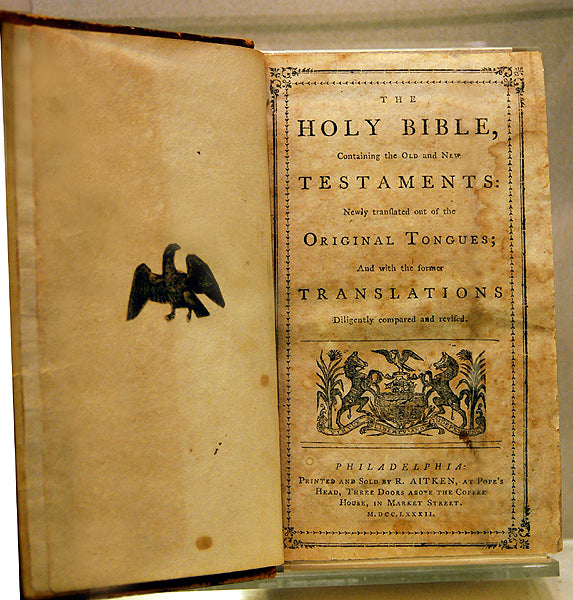

When the American colonies declared independence in 1776, they faced an unexpected problem: a shortage of Bibles.
Before the war, most English Bibles had been imported from Britain. Once hostilities began, those supply lines collapsed.
Churches and families across the colonies struggled to obtain copies of scripture.
Robert Aitken’s Proposal
A Philadelphia printer named Robert Aitken recognized the need for a domestically printed Bible.
Aitken had already published religious materials and a magazine. Encouraged by ministers and church leaders, he began preparing a complete English Bible based on the King James translation.
Because printing such a large work required public trust, Aitken sought official recognition from the United States Congress.
Congressional Endorsement
In 1782 Congress reviewed Aitken’s work and issued a statement praising the accuracy of his edition. While Congress did not fund the project, their endorsement gave the publication credibility.
This event marked the first time the United States government formally supported the printing of a Bible.
The resulting volume became known as the Aitken Bible, sometimes called the “Bible of the American Revolution.”
Contents of the Aitken Bible
Unlike the earliest King James editions, the Aitken Bible omitted the Apocrypha.
Its structure matched the modern Protestant Bible:
- 39 Old Testament books
- 27 New Testament books
Total: 66 books.
This format soon became the dominant pattern for American Protestant Bibles.
Conclusion: Scripture in a Revolutionary Society
The King James, Saur, and Aitken Bibles together illustrate the religious diversity of early America. English-speaking Protestants relied on the King James translation inherited from Britain. German immigrants used the Saur Bible printed in their own language. After independence, the Aitken Bible demonstrated that Americans could produce their own scriptures without relying on foreign printers.
Each of these Bibles reflects a different dimension of early American life: imperial heritage, immigrant culture, and national independence. Together they reveal how deeply scripture shaped the moral and intellectual world of the revolutionary generation and birthed a Nation lead by the Word of God.
©️ Copyright 2026 All Rights Reserved Founding Faith Podcast
 Founding Faith Podcast